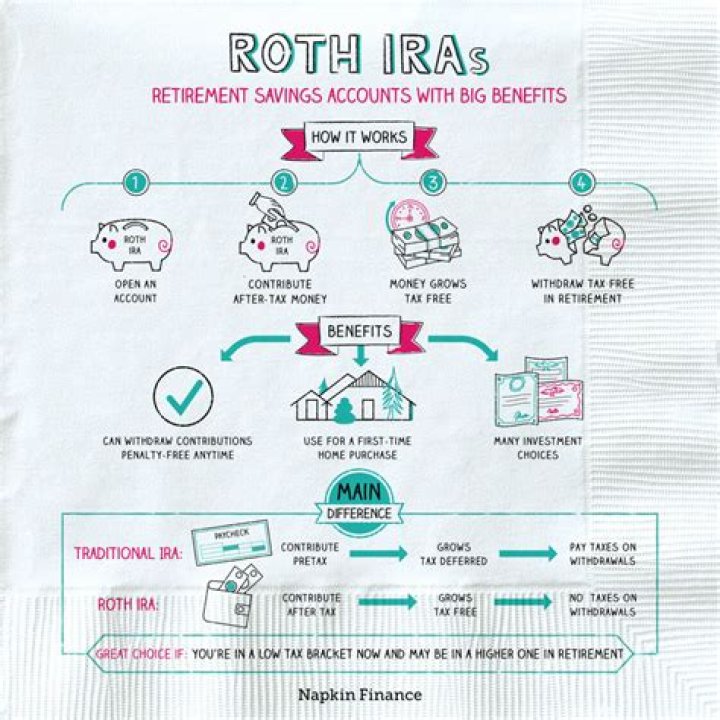
If you plan to sell a mutual fund in a Roth IRA and withdraw the money, you won’t owe any tax as long as you meet the criteria for a qualified distribution. With traditional IRAs, you’ll owe tax on your profits as well as on your previously untaxed contributions.
Are ROTH IRAs exempt from capital gains tax?
Unlike a traditional IRA, the Roth IRA allows you to pay your tax bill up front in exchange for tax-free income later. On top of that, buying and selling stocks in your account before you retire won’t trigger any capital gains taxes.
Are capital gains taxed in Roth IRA?
Insofar as the capital gains . . . No capital gain taxes on that profit. And, once you withdraw from the IRA — Roth or traditional — you still are not taxed on the capital gains. One thing to keep in mind, however, is that your traditional IRA disbursements will be taxed as ordinary income.
Are capital gains in an IRA account taxable?
Funds you invest in an IRA are free of capital gains taxes entirely, although distributions are subject to regular income tax rates when you finally access your IRA.
How are capital gains and losses treated in a Roth IRA?
One of these investments has an inherent loss of $20,000, and the other has an inherent gain of $30,000. By selling out of the “loss” position completely and selling just enough of the “gain” position to offset the tax loss you’ve realized, you have effectively created a tax-free source of income in the amount of $20,000.
Do you have to pay taxes on capital gains on an IRA?
As long as your gains are contained within the IRA, you aren’t subject to any taxes on those gains. That is one of the best reasons to have one. Your contributions are taxed before making them, so like life insurance, it isn’t taxable coming out.
Can you put profit from sale of home in IRA?
“Pensions, Social Security benefits, gains from the sale of your home, or interest and dividends don’t count as earned income.” If your earned income is less than $6,000, your IRA contribution is limited to the smaller amount, he said.
How much can you sell to offset a loss in a Roth IRA?
By selling out of the “loss” position completely and selling just enough of the “gain” position to offset the tax loss you’ve realized, you have effectively created a tax-free source of income in the amount of $20,000. This still leaves $5,000 if you’re planning to convert the entire amount.