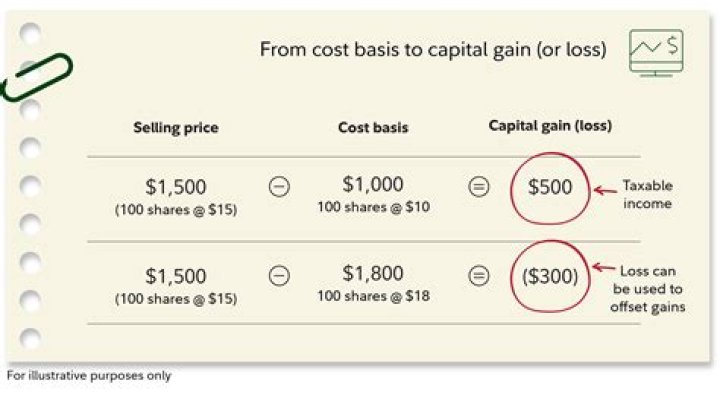
The difference between the buying price and the selling price is your capital gain or loss. The formula is Sale Price – Cost Basis = Capital Gain. For example, suppose you purchased 100 shares of stock for $1 each for a total value of $100. After three months, the stock price rises to $5 per share, making your investment worth $500.
How to calculate long term capital gains tax?
The first step in how to calculate long-term capital gains tax is generally to find the difference between what you paid for your property and how much you sold it for—adjusting for commissions or fees. Depending on your income level, your capital gain will be taxed federally at either 0%, 15% or 20%. How to Figure Long-Term Capital Gains Tax
How are capital gains taxed when you sell an asset?
The profit you make when you sell assets is equal to your capital gains on the sale. Capital gains are taxed at the federal level and in some states at the state level, too. The capital gains tax rate varies based in part on how long you hold the asset before selling.
How are capital gains calculated for 35 percent tax bracket?
However, if you are in the 35 percent tax bracket, then you would need to pay $140 in capital gains tax ( {\displaystyle \$400*.35=\$140} ). Your total profit would then only be $260 ( {\displaystyle \$400-\$140=\$260} ). Suppose in the same example, after 13 months, each share of stock was worth $4.50. Your total investment would be worth $450.
How are capital gains calculated on sale of immovable property?
For calculating long term capital gains, the seller of immovable property can claim indexed cost of acquisition. Indexation is done by applying CII – Cost Inflation Index. This increases your cost base i.e., purchase price and lowers your gains. Your purchase price is adjusted for the impact of inflation.
How is a long term capital gain calculated?
Long Term Capital Gain is calculated by deducting the sum of the following costs from the final sale price of the house: 1 Indexed Acquisition Cost 2 Indexed House Improvement Cost 3 Transfer Cost
Where do I find the definition of capital gains?
There are 12 references cited in this article, which can be found at the bottom of the page. Capital gains are the portion of increase above the initial amount invested in vehicles such as stocks, bonds or real estate. It is the difference between original purchase price (or basis) and selling price.