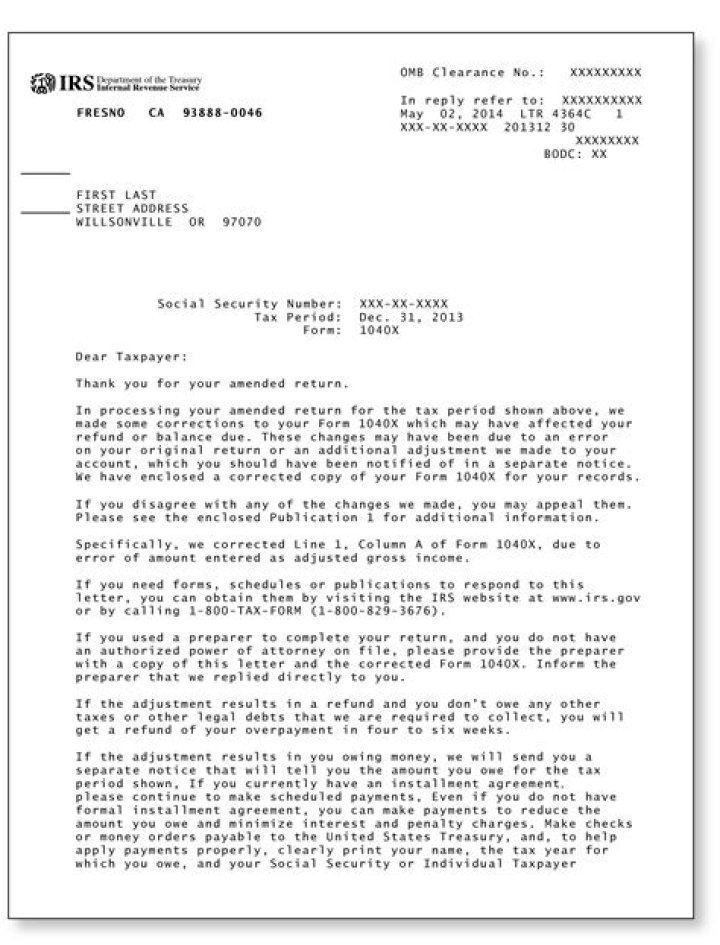
If a correction is needed, there may be a slight delay in processing the return and the IRS will send the taxpayer a letter or notice explaining any change. Taxpayers who receive a notice saying the IRS changed the amount of their 2020 credit should read the notice.
When to write a letter of explanation to the IRS?
If you have received a written notice from the IRS requesting an adjustment to a recent tax return, requesting additional documentation for your return, or if the IRS sends notice that your payment is late, you need to know how to respond appropriately.
What to do if you receive IRS Notice CP09?
Please check the information the IRS has sent to you. That notice says complete the form and return it in the envelope provided. They are not asking you to amend the return but to submit the information needed on that form. Check the front and back of the pages. That is not a form that TuboTax has access to.
How to tell if a letter from the IRS is fake?
Here are some ways to tell if a notice from the IRS is fake news: It appears to be issued from an address in Austin, Texas. It is related to the Affordable Care Act and requests information regarding coverage from that year. It lists the LTR number in the payment voucher as ‘105C’.
How to qualify for the Working Tax Credit?
To qualify for the disability element of working tax credit you must meet three conditions including a qualifying benefit test. One way of meeting the qualifying benefit condition is through receipt of benefits such as Disability Living Allowance (DLA), Personal Independence Payment (PIP) or Attendance Allowance (AA).
Why are there no child tax credits for 2020?
Here are some common reasons the IRS corrected the credit: The individual was claimed as a dependent on another person’s 2020 tax return. The individual did not provide a Social Security number valid for employment. The qualifying child was age 17 or older on January 1, 2020.
How does the disability element of working tax credit work?
After that initial period expired, they continued to meet the qualifying benefit test by virtue of receipt of the disability element of working tax credit itself. This allows their entitlement to the disability element to keep going for as long as they are working at least 16 hours a week and are at a disadvantage in getting a job.