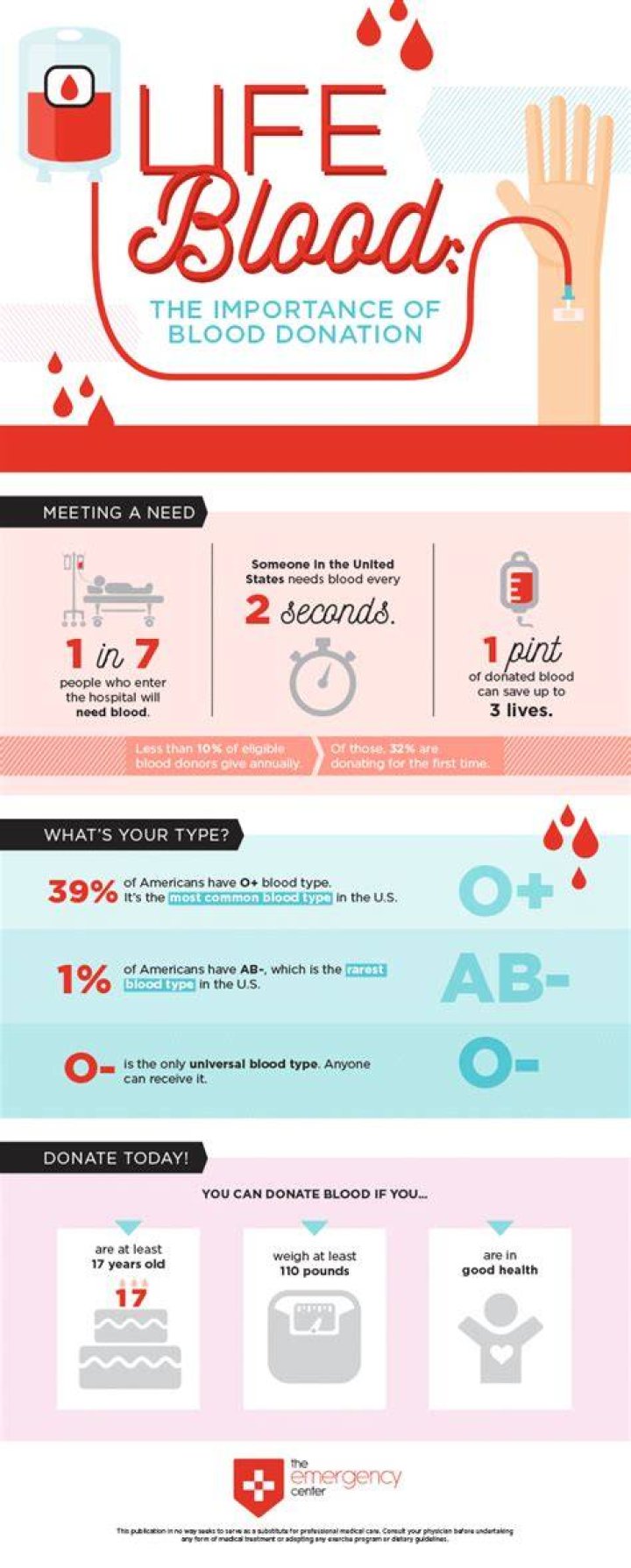
The Importance of Donating Blood An adequate amount of blood is needed in all health care facilities to meet the urgent need for patients facing trauma and other lifesaving procedures, such as blood transfusions – which saves millions of lives each year.
How do you ask for blood donation?
I have made for you a selection of 11 blood donation slogans that are not only very convincing but also funny and unforgettable.
- “Anybody can give blood”
- “Bring a life back to power.
- “Spare only 15 minutes and save one life”
- “Heroes come in all types and sizes”
- “Anybody can save lives”
What are the common risks of donating blood?
The side effects of donating blood include nausea and dizziness and fainting in some cases. You may develop a raised bump or experience continued bleeding and bruising at the needle site too. Some people might experience pain and physical weakness after donating blood.
What are the reasons for not giving blood?
You must never donate if:
- You are HIV positive or receiving treatment for HIV.
- You are a hepatitis B carrier.
- You are a hepatitis C carrier.
- You are HTLV positive.
- You have ever been diagnosed with syphilis, even if treated.
- You have ever injected, or been injected with, drugs; even a long time ago or only once.
Can I donate blood everyday?
Summary. Most people can donate whole blood every 56 days. This is the most common type of blood donation. Most people can donate red blood cells every 112 days.
Does donating blood make you weak?
After donating blood, it’s likely you’ll experience some physical weakness, especially in the arm into which the needle was injected. For that reason, the nurses will advise you to avoid intense physical activity or heavy lifting for five hours after you donate blood.
What is the slogan of World Blood Donor Day 2019?
This day is celebrated to thank the blood donors, acknowledge them, and encourage blood donation and new donors. The slogan of this day was ‘Be there for someone else, Share Life, Give Blood’, which refers to the care given to others while donating blood.
Do blood donors live longer?
A new study shows that people, who donate a lot of blood, suffer no serious ill effects and may even live longer than less frequent donors. A new study concludes that regular blood donors are not at a greater risk of a premature death than those who rarely donate blood.
Does donating blood weaken your immune system?
There is no evidence blood donation weakens the immune system. Blood donation is needed to keep the supply available to patients who need it. To best prepare for your donation get sleep, eat a good meal, and drink fluids.
Can a diabetic donate blood *?
It is generally safe for people with diabetes to donate blood under normal health conditions. People with diabetes can donate blood, as long as they maintain healthy blood sugar levels at the time of blood donation, according to Dr Sanjay Reddy, Consultant Diabetologist, Fortis Hospital at Cunningham Road, Bangalore.
What’s the best way to answer a donation question?
While we all know that “cost per dollar” is not the most efficient way of evaluating a charity’s worth, this question is often important to donors. Answer this question honestly and include your percentages in a transparent way, but do point out that “the cause” includes overhead!
How to answer the question who has access to my donor data?
Here’s how we store it and how we use it: [explanation].” You can also include an answer to the question: “Who has access to my donor data?” Mention that donors can give anonymously and that their desire to avoid recognition will be respected by your organization.
What to ask a donor when asking for a gift?
One idea was to reach out to donors by phone to “check in” not simply to call when asking for money. One of the challenges I hear from development directors frequently is that they can’t get meetings with prospective donors, because they can’t get through on the phone.
What should I include in my donation form?
You can also include an answer to the question: “Who has access to my donor data?” Mention that donors can give anonymously and that their desire to avoid recognition will be respected by your organization. 2. What percentage of my donation goes to the cause?