The election to reduce the basis of depreciable property under section 108(b)(5) and the election made on line 1d of Part I regarding the discharge of qualified real property business indebtedness must be made on a timely filed return (including extensions) and can be revoked only with the consent of the IRS.
Does Cancelled debt decrease basis?
For cancellation of qualified principal residence indebtedness that you exclude from income, you must only reduce your basis in your principal residence.
What is Section 1017 property?
Section 1017 deals with the reduction in basis of property necessary as a result of the application of the bankruptcy, insolvency, or QFI exclusions, whether under the general reduction rules or under the elective reduction of basis of depreciable prop- erty before the application of the general reduction rules.
What do you need to know about Form 982?
You must file Form 982 to report the exclusion and the reduction of certain tax attributes either dollar for dollar or 331/3 cents per dollar (as explained below). IF the discharged debt you are excluding is… THEN follow these steps…
How to reduce basis of depreciable property on Form 982?
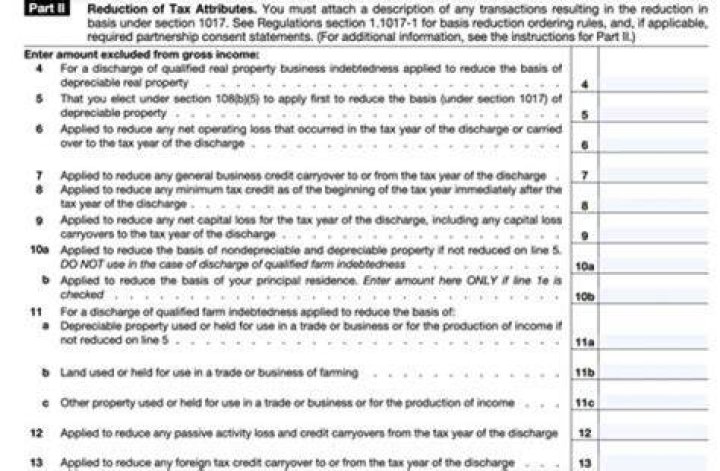
Use Part II to report your reduction of tax attributes. The reduction must be made in the following order unless you check the box on line 1d for qualified real property business indebtedness or make the election on line 5 to reduce basis of depreciable property first.
Can you exclude discharged indebtedness on Form 982?
However, under certain circumstances described in section 108, you can exclude the amount of discharged indebtedness from your gross income. You must file Form 982 to report the exclusion and the reduction of certain tax attributes either dollar for dollar or 331/3 . cents per dollar (as explained later).
What does qualified acquisition indebtedness mean on IRS Form 982?
Qualified acquisition indebtedness is (a) debt incurred or assumed to acquire, construct, reconstruct, or substantially improve real property that is secured by such debt and (b) debt resulting from the refinancing of qualified acquisition indebtedness to the extent the amount of such debt doesn’t exceed the amount of debt being refinanced.